
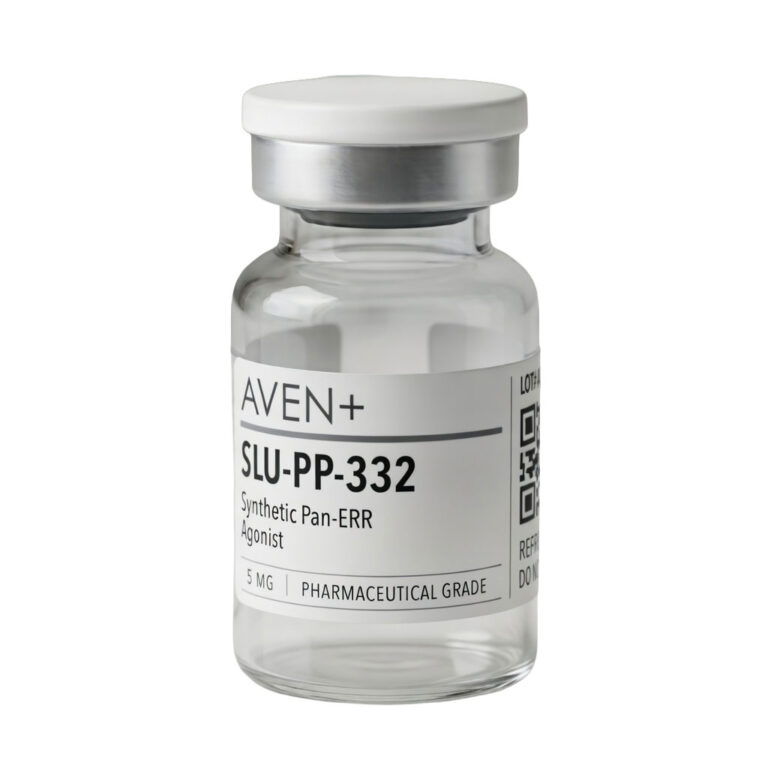
SLU-PP-332 (5mg)
$79.99 – $599.93Price range: $79.99 through $599.93
Free Ship at $200+
Online Chat Support
99% Purity Guaranteed
SLU-PP-332 (5mg)
SLU-PP-332 is a small-molecule research compound identified as a selective agonist of peroxisome proliferator-activated receptor delta (PPAR-δ). In preclinical models, it enhances fatty acid oxidation, mitochondrial biogenesis, and metabolic efficiency by modulating PPAR-δ–dependent gene expression. SLU-PP-332 is widely used in metabolic and mitochondrial research focused on lipid metabolism, endurance signaling, and cellular energy regulation mechanisms.
Starting from: $79.99 – $599.93Price range: $79.99 through $599.93
Aven Peptides Guarantee
Every Aven Peptides Guarantee product is released through a controlled quality framework verifying identity, purity, consistency, endotoxin levels, and heavy metal content. Each batch undergoes analytical testing to confirm peptide composition prior to distribution, including independent laboratory verification using chromatographic and mass spectrometry methods. Only batches that pass internal quality review and release authorization enter circulation, reflecting our commitment to rigorous testing, documentation, traceability, and the continuous pursuit of uncompromising quality.
SLU-PP-332 is a small-molecule research compound identified as a selective agonist of peroxisome proliferator-activated receptor delta (PPAR-δ). It has gained attention in preclinical research for its ability to influence energy metabolism, lipid utilization, and mitochondrial function.
1. Enhances Fatty Acid Oxidation
One of the primary benefits of SLU-PP-332 is its ability to increase fatty acid oxidation. By activating PPAR-δ–dependent gene expression, the compound promotes the use of fatty acids as a primary energy source, making it valuable in research focused on lipid metabolism and fat utilization pathways.
2. Supports Mitochondrial Biogenesis
SLU-PP-332 has been shown in preclinical models to stimulate pathways associated with mitochondrial biogenesis. Increasing mitochondrial number and efficiency is essential for improved cellular energy production, making this compound important in studies of mitochondrial health and metabolic performance.
3. Improves Metabolic Efficiency
Through coordinated regulation of genes involved in energy production, SLU-PP-332 supports greater metabolic efficiency. This allows cells to generate more energy from available substrates, a key focus area in metabolic optimization and energy balance research.
4. Supports Endurance and Exercise Adaptation Research
PPAR-δ signaling is closely linked to endurance capacity and oxidative muscle fiber function. SLU-PP-332 is widely used in experimental models studying endurance signaling, aerobic capacity, and exercise-mimetic metabolic adaptations.
5. Promotes Lipid Metabolism Balance
SLU-PP-332 influences multiple genes involved in lipid transport, storage, and breakdown, supporting balanced lipid handling within cells. This makes it useful in research examining dyslipidemia, metabolic syndrome, and lipid-related metabolic disorders.
6. Supports Glucose and Energy Homeostasis
By improving fatty acid utilization and mitochondrial efficiency, SLU-PP-332 indirectly supports glucose-sparing effects and overall energy homeostasis. Researchers study this interaction to better understand substrate switching and metabolic flexibility.
7. Valuable Tool in Mitochondrial and Aging Research
Mitochondrial decline is a hallmark of aging. SLU-PP-332 is commonly used in aging and longevity research to explore how enhancing mitochondrial function may support cellular resilience and age-related metabolic stability.
8. Selective PPAR-δ Activation with Targeted Signaling
Unlike compounds that broadly activate multiple PPAR subtypes, SLU-PP-332 is valued for its selective PPAR-δ activation, allowing researchers to study specific receptor-driven metabolic pathways with reduced off-target effects.
9. Useful in Systems-Level Metabolic Research
SLU-PP-332 enables investigation into how gene regulation, mitochondrial activity, and energy metabolism interact at a systems level. This makes it a powerful research tool for studying integrated metabolic networks rather than isolated pathways.
Summary
In research contexts, SLU-PP-332 is valued for its potential benefits related to fatty acid oxidation, mitochondrial biogenesis, metabolic efficiency, endurance signaling, and energy regulation. As a selective PPAR-δ agonist, it provides important insights into lipid metabolism, mitochondrial health, and cellular energy balance, making it a key compound in advanced metabolic and mitochondrial research.
Only logged in customers who have purchased this product may leave a review.
Lyophilized (freeze-dried) peptides should be stored in a refrigerator at 2–8°C (36–46°F). For long-term storage, they should be kept in a freezer at -20°C (-4°F) or below. Once reconstituted, peptides must be stored in a refrigerator at 2–8°C (36–46°F) and should not be left at room temperature for extended periods.
Add 2mL of bacteriostatic water to get a solution that is 2.5mg/mL, such that every 0.1mL (10 units on an insulin syringe) is equal to 250mcg of SLU-PP-332.
-
Description
SLU-PP-332 is a small-molecule research compound identified as a selective agonist of peroxisome proliferator-activated receptor delta (PPAR-δ). It has gained attention in preclinical research for its ability to influence energy metabolism, lipid utilization, and mitochondrial function.
1. Enhances Fatty Acid Oxidation
One of the primary benefits of SLU-PP-332 is its ability to increase fatty acid oxidation. By activating PPAR-δ–dependent gene expression, the compound promotes the use of fatty acids as a primary energy source, making it valuable in research focused on lipid metabolism and fat utilization pathways.
2. Supports Mitochondrial Biogenesis
SLU-PP-332 has been shown in preclinical models to stimulate pathways associated with mitochondrial biogenesis. Increasing mitochondrial number and efficiency is essential for improved cellular energy production, making this compound important in studies of mitochondrial health and metabolic performance.
3. Improves Metabolic Efficiency
Through coordinated regulation of genes involved in energy production, SLU-PP-332 supports greater metabolic efficiency. This allows cells to generate more energy from available substrates, a key focus area in metabolic optimization and energy balance research.
4. Supports Endurance and Exercise Adaptation Research
PPAR-δ signaling is closely linked to endurance capacity and oxidative muscle fiber function. SLU-PP-332 is widely used in experimental models studying endurance signaling, aerobic capacity, and exercise-mimetic metabolic adaptations.
5. Promotes Lipid Metabolism Balance
SLU-PP-332 influences multiple genes involved in lipid transport, storage, and breakdown, supporting balanced lipid handling within cells. This makes it useful in research examining dyslipidemia, metabolic syndrome, and lipid-related metabolic disorders.
6. Supports Glucose and Energy Homeostasis
By improving fatty acid utilization and mitochondrial efficiency, SLU-PP-332 indirectly supports glucose-sparing effects and overall energy homeostasis. Researchers study this interaction to better understand substrate switching and metabolic flexibility.
7. Valuable Tool in Mitochondrial and Aging Research
Mitochondrial decline is a hallmark of aging. SLU-PP-332 is commonly used in aging and longevity research to explore how enhancing mitochondrial function may support cellular resilience and age-related metabolic stability.
8. Selective PPAR-δ Activation with Targeted Signaling
Unlike compounds that broadly activate multiple PPAR subtypes, SLU-PP-332 is valued for its selective PPAR-δ activation, allowing researchers to study specific receptor-driven metabolic pathways with reduced off-target effects.
9. Useful in Systems-Level Metabolic Research
SLU-PP-332 enables investigation into how gene regulation, mitochondrial activity, and energy metabolism interact at a systems level. This makes it a powerful research tool for studying integrated metabolic networks rather than isolated pathways.
Summary
In research contexts, SLU-PP-332 is valued for its potential benefits related to fatty acid oxidation, mitochondrial biogenesis, metabolic efficiency, endurance signaling, and energy regulation. As a selective PPAR-δ agonist, it provides important insights into lipid metabolism, mitochondrial health, and cellular energy balance, making it a key compound in advanced metabolic and mitochondrial research.
-
Reviews (0)
Reviews
There are no reviews yet.
Only logged in customers who have purchased this product may leave a review.
-
Storage Instructions
Lyophilized (freeze-dried) peptides should be stored in a refrigerator at 2–8°C (36–46°F). For long-term storage, they should be kept in a freezer at -20°C (-4°F) or below. Once reconstituted, peptides must be stored in a refrigerator at 2–8°C (36–46°F) and should not be left at room temperature for extended periods.
-
Reconstitution
Add 2mL of bacteriostatic water to get a solution that is 2.5mg/mL, such that every 0.1mL (10 units on an insulin syringe) is equal to 250mcg of SLU-PP-332.

Reviews
There are no reviews yet.