
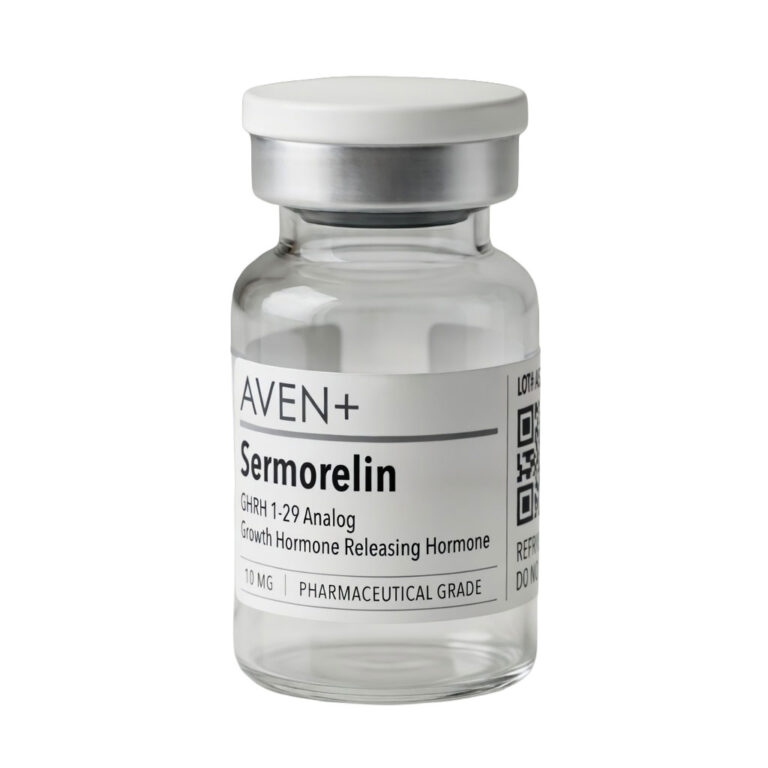
Sermorelin (10mg)
$74.99 – $562.43Price range: $74.99 through $562.43
Free Ship at $200+
Online Chat Support
99% Purity Guaranteed
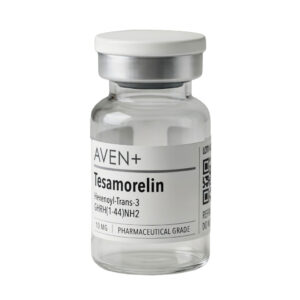
Sermorelin (10mg)
Sermorelin 10 mg is a synthetic research peptide composed of the first 29 amino acids of growth hormone–releasing hormone (GHRH 1–44), representing its biologically active region. In preclinical studies, sermorelin binds to GHRH receptors on pituitary somatotrophs, activating cAMP-dependent signaling pathways that stimulate endogenous growth hormone synthesis and release. It is widely used in research focused on hypothalamic–pituitary regulation, endocrine feedback mechanisms, and somatotropic peptide signaling.
Starting from: $74.99 – $562.43Price range: $74.99 through $562.43
Aven Peptides Guarantee
Every Aven Peptides Guarantee product is released through a controlled quality framework verifying identity, purity, consistency, endotoxin levels, and heavy metal content. Each batch undergoes analytical testing to confirm peptide composition prior to distribution, including independent laboratory verification using chromatographic and mass spectrometry methods. Only batches that pass internal quality review and release authorization enter circulation, reflecting our commitment to rigorous testing, documentation, traceability, and the continuous pursuit of uncompromising quality.
Sermorelin is a synthetic growth hormone–releasing hormone (GHRH) analog composed of the first 29 amino acids of native GHRH, which represent its biologically active region. Rather than supplying growth hormone (GH) directly, sermorelin works by stimulating the body’s natural GH production through pituitary receptor activation.
1. Stimulates Natural Growth Hormone Production
One of the primary benefits of sermorelin is its ability to promote endogenous growth hormone release. By binding to GHRH receptors on pituitary somatotroph cells, sermorelin activates cAMP signaling pathways that trigger physiological GH synthesis and secretion, preserving the body’s natural hormone rhythms.
2. Preserves Pulsatile Growth Hormone Secretion
Unlike exogenous GH, sermorelin supports natural pulsatile GH release, which is essential for maintaining receptor sensitivity and endocrine balance. This makes it valuable in research examining long-term hormone regulation and feedback mechanisms within the hypothalamic–pituitary axis.
3. Supports Lean Mass and Muscle Recovery Research
Growth hormone plays a key role in protein synthesis, muscle repair, and tissue regeneration. Sermorelin is widely studied in models exploring lean muscle maintenance, recovery after physical stress, and musculoskeletal signaling pathways.
4. Encourages Fat Metabolism and Body Composition Balance
GH signaling influences lipolysis and energy utilization. Research involving sermorelin often focuses on its potential role in fat metabolism and body composition regulation, making it relevant in metabolic and weight-management studies.
5. Supports Sleep and Recovery Pathways
Growth hormone is primarily released during deep sleep stages. Sermorelin is studied for its indirect effects on sleep quality and overnight recovery signaling, as improved GH release may enhance restorative processes.
6. Maintains Endocrine Feedback Integrity
Because sermorelin works upstream in the endocrine system, it helps preserve normal feedback loops involving the hypothalamus, pituitary gland, and liver (IGF-1 signaling). This makes it an important compound in studies of hormonal balance and regulatory stability.
7. Supports Healthy Aging Research
Natural GH levels decline with age. Sermorelin is frequently studied in aging and longevity research to better understand how stimulating endogenous GH production may support cellular repair, metabolic health, and age-related hormonal changes.
8. Favorable Safety and Selectivity Profile in Research
Research models suggest sermorelin has a targeted mechanism of action with minimal stimulation of unrelated pituitary hormones. This selectivity makes it useful for endocrine pharmacology studies focused specifically on growth hormone regulation.
9. Valuable Tool in Somatotropic and Pituitary Research
Sermorelin is commonly used to study:
GHRH receptor activation
GH pulse dynamics
Pituitary responsiveness
Endocrine feedback regulation
Its predictable activity makes it a cornerstone peptide in somatotropic signaling research.
Summary
In research and clinical contexts, sermorelin is valued for its benefits related to natural growth hormone stimulation, preservation of physiological GH rhythms, muscle recovery signaling, fat metabolism, sleep-related recovery, and healthy aging pathways. By working with the body’s own endocrine system, sermorelin provides a balanced and physiologically aligned approach to growth hormone research.
Only logged in customers who have purchased this product may leave a review.
Lyophilized (freeze-dried) peptides should be stored in a refrigerator at 2–8°C (36–46°F). For long-term storage, they should be kept in a freezer at -20°C (-4°F) or below. Once reconstituted, peptides must be stored in a refrigerator at 2–8°C (36–46°F) and should not be left at room temperature for extended periods.
Add 1mL of bacteriostatic water to get a solution that is 10mg/mL, such that every 0.1mL (10 units on an insulin syringe) is equal to 1mg of Sermorelin.
-
Description
Sermorelin is a synthetic growth hormone–releasing hormone (GHRH) analog composed of the first 29 amino acids of native GHRH, which represent its biologically active region. Rather than supplying growth hormone (GH) directly, sermorelin works by stimulating the body’s natural GH production through pituitary receptor activation.
1. Stimulates Natural Growth Hormone Production
One of the primary benefits of sermorelin is its ability to promote endogenous growth hormone release. By binding to GHRH receptors on pituitary somatotroph cells, sermorelin activates cAMP signaling pathways that trigger physiological GH synthesis and secretion, preserving the body’s natural hormone rhythms.
2. Preserves Pulsatile Growth Hormone Secretion
Unlike exogenous GH, sermorelin supports natural pulsatile GH release, which is essential for maintaining receptor sensitivity and endocrine balance. This makes it valuable in research examining long-term hormone regulation and feedback mechanisms within the hypothalamic–pituitary axis.
3. Supports Lean Mass and Muscle Recovery Research
Growth hormone plays a key role in protein synthesis, muscle repair, and tissue regeneration. Sermorelin is widely studied in models exploring lean muscle maintenance, recovery after physical stress, and musculoskeletal signaling pathways.
4. Encourages Fat Metabolism and Body Composition Balance
GH signaling influences lipolysis and energy utilization. Research involving sermorelin often focuses on its potential role in fat metabolism and body composition regulation, making it relevant in metabolic and weight-management studies.
5. Supports Sleep and Recovery Pathways
Growth hormone is primarily released during deep sleep stages. Sermorelin is studied for its indirect effects on sleep quality and overnight recovery signaling, as improved GH release may enhance restorative processes.
6. Maintains Endocrine Feedback Integrity
Because sermorelin works upstream in the endocrine system, it helps preserve normal feedback loops involving the hypothalamus, pituitary gland, and liver (IGF-1 signaling). This makes it an important compound in studies of hormonal balance and regulatory stability.
7. Supports Healthy Aging Research
Natural GH levels decline with age. Sermorelin is frequently studied in aging and longevity research to better understand how stimulating endogenous GH production may support cellular repair, metabolic health, and age-related hormonal changes.
8. Favorable Safety and Selectivity Profile in Research
Research models suggest sermorelin has a targeted mechanism of action with minimal stimulation of unrelated pituitary hormones. This selectivity makes it useful for endocrine pharmacology studies focused specifically on growth hormone regulation.
9. Valuable Tool in Somatotropic and Pituitary Research
Sermorelin is commonly used to study:
GHRH receptor activation
GH pulse dynamics
Pituitary responsiveness
Endocrine feedback regulation
Its predictable activity makes it a cornerstone peptide in somatotropic signaling research.
Summary
In research and clinical contexts, sermorelin is valued for its benefits related to natural growth hormone stimulation, preservation of physiological GH rhythms, muscle recovery signaling, fat metabolism, sleep-related recovery, and healthy aging pathways. By working with the body’s own endocrine system, sermorelin provides a balanced and physiologically aligned approach to growth hormone research.
-
Reviews (0)
Reviews
There are no reviews yet.
Only logged in customers who have purchased this product may leave a review.
-
Storage Instructions
Lyophilized (freeze-dried) peptides should be stored in a refrigerator at 2–8°C (36–46°F). For long-term storage, they should be kept in a freezer at -20°C (-4°F) or below. Once reconstituted, peptides must be stored in a refrigerator at 2–8°C (36–46°F) and should not be left at room temperature for extended periods.
-
Reconstitution
Add 1mL of bacteriostatic water to get a solution that is 10mg/mL, such that every 0.1mL (10 units on an insulin syringe) is equal to 1mg of Sermorelin.

Reviews
There are no reviews yet.