
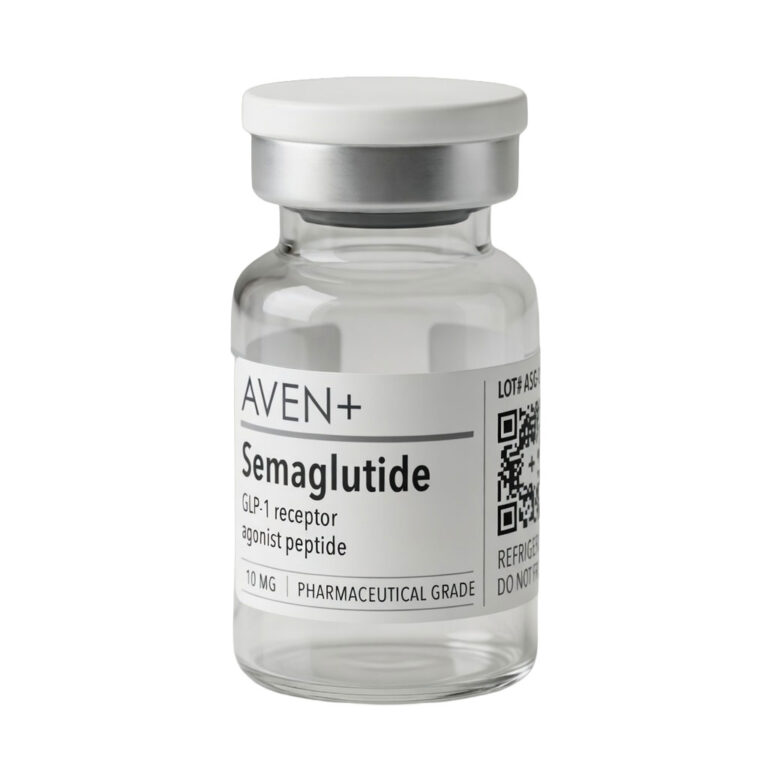
Semaglutide (10mg)
$79.99 – $599.93Price range: $79.99 through $599.93
Free Ship at $200+
Online Chat Support
99% Purity Guaranteed
Semaglutide (10mg)
Semaglutide 10 mg is a once-weekly GLP-1 receptor agonist peptide originally developed for type 2 diabetes and now widely recognized for its effects on appetite control, weight management, and metabolic health. Known under brand names such as Ozempic®, Wegovy®, and Rybelsus®, semaglutide represents a new generation of GLP-1–based therapies that support reduced hunger, improved satiety, and fat-loss–focused metabolic regulation.
Starting from: $79.99 – $599.93Price range: $79.99 through $599.93
Aven Peptides Guarantee
Every Aven Peptides Guarantee product is released through a controlled quality framework verifying identity, purity, consistency, endotoxin levels, and heavy metal content. Each batch undergoes analytical testing to confirm peptide composition prior to distribution, including independent laboratory verification using chromatographic and mass spectrometry methods. Only batches that pass internal quality review and release authorization enter circulation, reflecting our commitment to rigorous testing, documentation, traceability, and the continuous pursuit of uncompromising quality.
Semaglutide is a GLP-1 (glucagon-like peptide-1) receptor agonist originally developed for the management of type 2 diabetes and now widely studied for its role in weight regulation and metabolic health. Developed by Novo Nordisk and marketed under names such as Ozempic, Wegovy, and Rybelsus, semaglutide represents a new generation of incretin-based therapies.
1. Powerful Appetite Control and Satiety
Semaglutide activates GLP-1 receptors in the brain regions that regulate hunger. Research shows this leads to reduced appetite, earlier satiety, and fewer food cravings, which supports lower caloric intake over time. This mechanism is central to its use in weight-management research.
2. Clinically Significant Weight Loss
One of the most notable benefits of semaglutide is its association with substantial and sustained weight reduction in clinical studies. By combining appetite suppression with slower digestion, semaglutide supports long-term fat loss rather than short-term appetite suppression alone.
3. Improves Blood Glucose Regulation
Originally designed for diabetes care, semaglutide enhances glucose-dependent insulin secretion while reducing excess glucagon release. This helps stabilize post-meal blood glucose levels and supports research into insulin sensitivity and glycemic control.
4. Slows Gastric Emptying
Semaglutide delays gastric emptying, meaning food leaves the stomach more slowly. This prolongs feelings of fullness after meals and helps reduce rapid spikes in blood sugar, contributing to better appetite and glucose regulation.
5. Supports Overall Metabolic Health
Beyond weight loss, semaglutide is studied for its effects on metabolic efficiency, including improvements in lipid profiles, insulin dynamics, and energy balance. These benefits make it relevant to research on metabolic syndrome and obesity-related conditions.
6. Once-Weekly Dosing for Consistent Signaling
Injectable semaglutide is designed for once-weekly administration, providing steady GLP-1 receptor activation. This long-acting profile supports consistent appetite and glucose control, which is beneficial for long-term metabolic studies.
7. Cardiometabolic Research Benefits
Weight reduction and improved glucose control are closely linked to cardiovascular risk factors. Semaglutide is therefore widely studied in cardiometabolic research, including investigations into blood pressure, lipid metabolism, and systemic inflammation markers.
8. Reduced Food Noise and Craving Behavior
Many research participants report a reduction in constant thoughts about food, often referred to as “food noise.” This behavioral effect is a key area of interest in studies on eating behavior, habit change, and sustainable weight management.
9. Versatile Research Applications
Semaglutide is used across multiple research areas, including:
Obesity and weight-loss biology
Type 2 diabetes and insulin signaling
Appetite and satiety neuroscience
Long-term metabolic adaptation
Its well-characterized mechanism makes it a cornerstone compound in GLP-1–based metabolic research.
Summary
In research and clinical contexts, semaglutide is valued for its benefits in appetite suppression, significant weight loss, improved blood glucose control, metabolic health support, and cardiometabolic risk reduction. As a GLP-1 receptor agonist, it has reshaped modern approaches to fat loss and metabolic regulation and continues to be a major focus of ongoing research.
Only logged in customers who have purchased this product may leave a review.
Lyophilized (freeze-dried) peptides should be stored in a refrigerator at 2–8°C (36–46°F). For long-term storage, they should be kept in a freezer at -20°C (-4°F) or below. Once reconstituted, peptides must be stored in a refrigerator at 2–8°C (36–46°F) and should not be left at room temperature for extended periods.
Add 2mL of bacteriostatic water to get a solution that is 5mg/mL, such that every 0.1mL (10 units on an insulin syringe) is equal to 0.5mg (500mcg) of Semaglutide.
-
Description
Semaglutide is a GLP-1 (glucagon-like peptide-1) receptor agonist originally developed for the management of type 2 diabetes and now widely studied for its role in weight regulation and metabolic health. Developed by Novo Nordisk and marketed under names such as Ozempic, Wegovy, and Rybelsus, semaglutide represents a new generation of incretin-based therapies.
1. Powerful Appetite Control and Satiety
Semaglutide activates GLP-1 receptors in the brain regions that regulate hunger. Research shows this leads to reduced appetite, earlier satiety, and fewer food cravings, which supports lower caloric intake over time. This mechanism is central to its use in weight-management research.
2. Clinically Significant Weight Loss
One of the most notable benefits of semaglutide is its association with substantial and sustained weight reduction in clinical studies. By combining appetite suppression with slower digestion, semaglutide supports long-term fat loss rather than short-term appetite suppression alone.
3. Improves Blood Glucose Regulation
Originally designed for diabetes care, semaglutide enhances glucose-dependent insulin secretion while reducing excess glucagon release. This helps stabilize post-meal blood glucose levels and supports research into insulin sensitivity and glycemic control.
4. Slows Gastric Emptying
Semaglutide delays gastric emptying, meaning food leaves the stomach more slowly. This prolongs feelings of fullness after meals and helps reduce rapid spikes in blood sugar, contributing to better appetite and glucose regulation.
5. Supports Overall Metabolic Health
Beyond weight loss, semaglutide is studied for its effects on metabolic efficiency, including improvements in lipid profiles, insulin dynamics, and energy balance. These benefits make it relevant to research on metabolic syndrome and obesity-related conditions.
6. Once-Weekly Dosing for Consistent Signaling
Injectable semaglutide is designed for once-weekly administration, providing steady GLP-1 receptor activation. This long-acting profile supports consistent appetite and glucose control, which is beneficial for long-term metabolic studies.
7. Cardiometabolic Research Benefits
Weight reduction and improved glucose control are closely linked to cardiovascular risk factors. Semaglutide is therefore widely studied in cardiometabolic research, including investigations into blood pressure, lipid metabolism, and systemic inflammation markers.
8. Reduced Food Noise and Craving Behavior
Many research participants report a reduction in constant thoughts about food, often referred to as “food noise.” This behavioral effect is a key area of interest in studies on eating behavior, habit change, and sustainable weight management.
9. Versatile Research Applications
Semaglutide is used across multiple research areas, including:
Obesity and weight-loss biology
Type 2 diabetes and insulin signaling
Appetite and satiety neuroscience
Long-term metabolic adaptation
Its well-characterized mechanism makes it a cornerstone compound in GLP-1–based metabolic research.
Summary
In research and clinical contexts, semaglutide is valued for its benefits in appetite suppression, significant weight loss, improved blood glucose control, metabolic health support, and cardiometabolic risk reduction. As a GLP-1 receptor agonist, it has reshaped modern approaches to fat loss and metabolic regulation and continues to be a major focus of ongoing research.
-
Reviews (0)
Reviews
There are no reviews yet.
Only logged in customers who have purchased this product may leave a review.
-
Storage Instructions
Lyophilized (freeze-dried) peptides should be stored in a refrigerator at 2–8°C (36–46°F). For long-term storage, they should be kept in a freezer at -20°C (-4°F) or below. Once reconstituted, peptides must be stored in a refrigerator at 2–8°C (36–46°F) and should not be left at room temperature for extended periods.
-
Reconstitution
Add 2mL of bacteriostatic water to get a solution that is 5mg/mL, such that every 0.1mL (10 units on an insulin syringe) is equal to 0.5mg (500mcg) of Semaglutide.



Reviews
There are no reviews yet.