
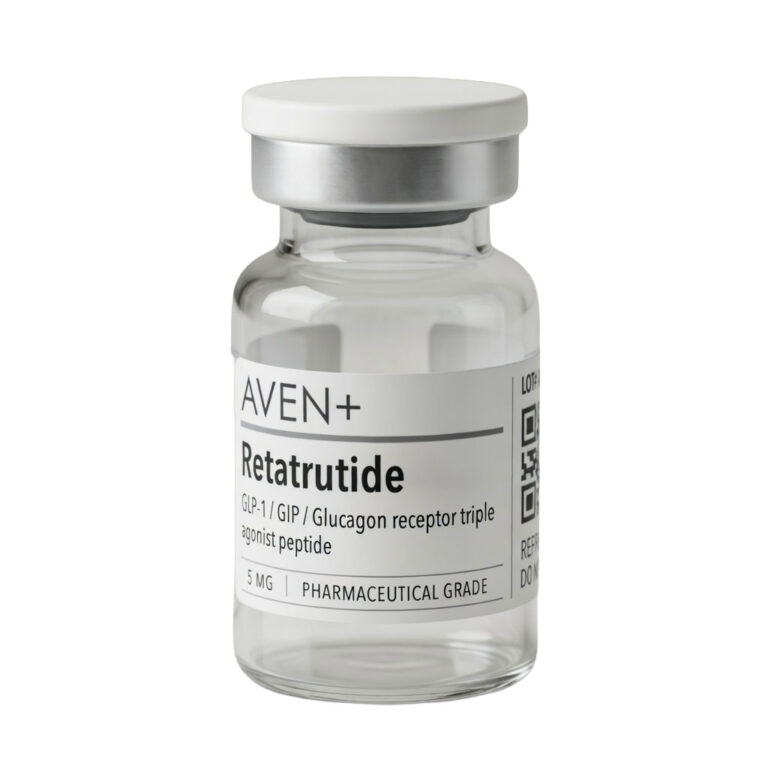
Retatrutide (5mg)
$49.99 – $374.93Price range: $49.99 through $374.93
Free Ship at $200+
Online Chat Support
99% Purity Guaranteed
Retatrutide (5mg)
Retatrutide, developed by Eli Lilly, is a next-generation triple agonist peptide that simultaneously activates GLP-1, GIP, and glucagon receptors. This multi-receptor approach differentiates retatrutide from earlier weight-management therapies by targeting appetite regulation, insulin signaling, energy expenditure, and fat oxidation in parallel, making it a major focus of advanced metabolic and obesity research.
Starting from: $49.99 – $374.93Price range: $49.99 through $374.93
Aven Peptides Guarantee
Every Aven Peptides Guarantee product is released through a controlled quality framework verifying identity, purity, consistency, endotoxin levels, and heavy metal content. Each batch undergoes analytical testing to confirm peptide composition prior to distribution, including independent laboratory verification using chromatographic and mass spectrometry methods. Only batches that pass internal quality review and release authorization enter circulation, reflecting our commitment to rigorous testing, documentation, traceability, and the continuous pursuit of uncompromising quality.
Retatrutide is an advanced triple-agonist peptide developed by Eli Lilly that simultaneously activates the GLP-1, GIP, and glucagon receptors. This multi-receptor design represents a major evolution in metabolic research, aiming to address appetite control, glucose regulation, energy expenditure, and fat metabolism together rather than in isolation.
1. Comprehensive Appetite and Satiety Regulation
Retatrutide activates GLP-1 and GIP receptors, which are known to influence hunger signals in the brain. Research shows this dual incretin action can significantly reduce appetite, enhance satiety, and lower caloric intake, making retatrutide a strong focus in weight-management and obesity research.
2. Supports Blood Glucose and Insulin Regulation
Through GLP-1 and GIP receptor activation, retatrutide helps regulate insulin secretion and glucose homeostasis. These mechanisms are central to studies on type 2 diabetes, insulin sensitivity, and post-meal glucose control, positioning retatrutide as an important compound in metabolic disease research.
3. Increases Energy Expenditure via Glucagon Receptor Activation
What sets retatrutide apart is its activation of the glucagon receptor, which is associated with increased energy expenditure and fat utilization. This pathway supports research into thermogenesis, lipid oxidation, and metabolic rate enhancement, areas not fully addressed by earlier GLP-1–only therapies.
4. Promotes Fat Oxidation and Metabolic Flexibility
By combining incretin signaling with glucagon-mediated pathways, retatrutide is studied for its ability to promote fat oxidation while preserving metabolic balance. This makes it valuable in research exploring body-fat reduction, energy substrate switching, and long-term metabolic adaptation.
5. Multi-Pathway Approach to Weight Management
Unlike single- or dual-agonist compounds, retatrutide targets three complementary metabolic pathways at once. This integrated approach allows researchers to study greater and more sustained weight-loss mechanisms compared to therapies that focus only on appetite suppression.
6. Supports Cardiometabolic Research
Weight regulation, glucose control, and lipid metabolism are tightly linked to cardiometabolic health. Retatrutide is therefore widely studied in models examining obesity-related metabolic risk factors, including insulin resistance and dysregulated energy balance.
7. Long-Acting Peptide Profile for Sustained Effects
Retatrutide is engineered for extended activity, allowing consistent receptor engagement over time. This long-acting profile is particularly useful in research focused on chronic metabolic regulation and long-term therapeutic potential.
8. Valuable Tool in Next-Generation Metabolic Therapy Research
Retatrutide represents a new class of multi-agonist metabolic peptides, making it a key compound for studying:
Integrated hormone signaling
Energy balance regulation
Obesity and diabetes mechanisms
Future peptide-based therapeutic strategies
Summary
In research contexts, retatrutide is valued for its potential benefits in appetite suppression, glucose regulation, increased energy expenditure, fat oxidation, and comprehensive weight-management signaling. Its unique triple-agonist mechanism (GLP-1, GIP, and glucagon) positions it at the forefront of next-generation metabolic and obesity research.
Only logged in customers who have purchased this product may leave a review.
Lyophilized (freeze-dried) peptides should be stored in a refrigerator at 2–8°C (36–46°F). For long-term storage, they should be kept in a freezer at -20°C (-4°F) or below. Once reconstituted, peptides must be stored in a refrigerator at 2–8°C (36–46°F) and should not be left at room temperature for extended periods.
Add 1mL of bacteriostatic water to get a solution that is 5mg/mL, such that every 0.1mL (10 units on an insulin syringe) is equal to 500mcg of Retatrutide.
-
Description
Retatrutide is an advanced triple-agonist peptide developed by Eli Lilly that simultaneously activates the GLP-1, GIP, and glucagon receptors. This multi-receptor design represents a major evolution in metabolic research, aiming to address appetite control, glucose regulation, energy expenditure, and fat metabolism together rather than in isolation.
1. Comprehensive Appetite and Satiety Regulation
Retatrutide activates GLP-1 and GIP receptors, which are known to influence hunger signals in the brain. Research shows this dual incretin action can significantly reduce appetite, enhance satiety, and lower caloric intake, making retatrutide a strong focus in weight-management and obesity research.
2. Supports Blood Glucose and Insulin Regulation
Through GLP-1 and GIP receptor activation, retatrutide helps regulate insulin secretion and glucose homeostasis. These mechanisms are central to studies on type 2 diabetes, insulin sensitivity, and post-meal glucose control, positioning retatrutide as an important compound in metabolic disease research.
3. Increases Energy Expenditure via Glucagon Receptor Activation
What sets retatrutide apart is its activation of the glucagon receptor, which is associated with increased energy expenditure and fat utilization. This pathway supports research into thermogenesis, lipid oxidation, and metabolic rate enhancement, areas not fully addressed by earlier GLP-1–only therapies.
4. Promotes Fat Oxidation and Metabolic Flexibility
By combining incretin signaling with glucagon-mediated pathways, retatrutide is studied for its ability to promote fat oxidation while preserving metabolic balance. This makes it valuable in research exploring body-fat reduction, energy substrate switching, and long-term metabolic adaptation.
5. Multi-Pathway Approach to Weight Management
Unlike single- or dual-agonist compounds, retatrutide targets three complementary metabolic pathways at once. This integrated approach allows researchers to study greater and more sustained weight-loss mechanisms compared to therapies that focus only on appetite suppression.
6. Supports Cardiometabolic Research
Weight regulation, glucose control, and lipid metabolism are tightly linked to cardiometabolic health. Retatrutide is therefore widely studied in models examining obesity-related metabolic risk factors, including insulin resistance and dysregulated energy balance.
7. Long-Acting Peptide Profile for Sustained Effects
Retatrutide is engineered for extended activity, allowing consistent receptor engagement over time. This long-acting profile is particularly useful in research focused on chronic metabolic regulation and long-term therapeutic potential.
8. Valuable Tool in Next-Generation Metabolic Therapy Research
Retatrutide represents a new class of multi-agonist metabolic peptides, making it a key compound for studying:
Integrated hormone signaling
Energy balance regulation
Obesity and diabetes mechanisms
Future peptide-based therapeutic strategies
Summary
In research contexts, retatrutide is valued for its potential benefits in appetite suppression, glucose regulation, increased energy expenditure, fat oxidation, and comprehensive weight-management signaling. Its unique triple-agonist mechanism (GLP-1, GIP, and glucagon) positions it at the forefront of next-generation metabolic and obesity research.
-
Reviews (0)
Reviews
There are no reviews yet.
Only logged in customers who have purchased this product may leave a review.
-
Storage Instructions
Lyophilized (freeze-dried) peptides should be stored in a refrigerator at 2–8°C (36–46°F). For long-term storage, they should be kept in a freezer at -20°C (-4°F) or below. Once reconstituted, peptides must be stored in a refrigerator at 2–8°C (36–46°F) and should not be left at room temperature for extended periods.
-
Reconstitution
Add 1mL of bacteriostatic water to get a solution that is 5mg/mL, such that every 0.1mL (10 units on an insulin syringe) is equal to 500mcg of Retatrutide.

Reviews
There are no reviews yet.