
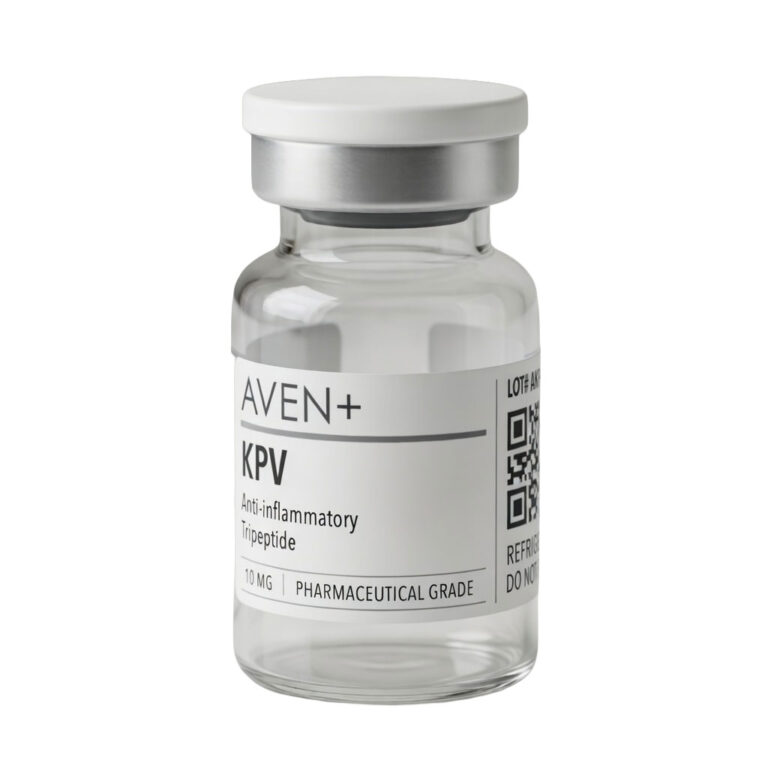
KPV (10mg)
$49.99 – $374.93Price range: $49.99 through $374.93
Free Ship at $200+
Online Chat Support
99% Purity Guaranteed
KPV (10mg)
KPV is a synthetic tripeptide fragment derived from the C-terminal sequence of alpha-melanocyte-stimulating hormone (α-MSH). It exerts regulatory effects on inflammatory signaling via melanocortin receptor activation and NF-κB pathway modulation in experimental models. KPV is used in research investigating epithelial integrity, cytokine balance, and immune-mediated stress responses.
Starting from: $49.99 – $374.93Price range: $49.99 through $374.93
Aven Peptides Guarantee
Every Aven Peptides Guarantee product is released through a controlled quality framework verifying identity, purity, consistency, endotoxin levels, and heavy metal content. Each batch undergoes analytical testing to confirm peptide composition prior to distribution, including independent laboratory verification using chromatographic and mass spectrometry methods. Only batches that pass internal quality review and release authorization enter circulation, reflecting our commitment to rigorous testing, documentation, traceability, and the continuous pursuit of uncompromising quality.
KPV is a tripeptide composed of just three amino acids: Lysine (K) – Proline (P) – Valine (V). It’s derived from the larger peptide hormone alpha-melanocyte-stimulating hormone (α-MSH), a key regulator in immune and inflammatory responses.
1. Gut Health & Inflammation
- Supports intestinal barrier integrity, reducing the risk of “leaky gut.”
- Calms inflammatory bowel responses, showing potential in research models of colitis and Crohn’s disease.
- May reduce systemic inflammation linked to poor gut health by preventing bacterial translocation and toxin leakage.
2. Skin Repair & Wound Healing
- Accelerates wound closure by reducing local inflammation and supporting tissue remodeling.
- Studied for use in eczema, psoriasis, and dermatitis, where overactive inflammation drives flare-ups.
- When applied topically, may help reduce redness, swelling, and irritation while promoting healing.
3. Systemic Anti-Inflammatory Effects
- Suppresses inflammatory cytokines (TNF-α, IL-1β, IL-6) across multiple tissues.
- May support joint health and recovery by reducing inflammatory stress on connective tissues.
- Considered in research as a safer alternative to corticosteroids, offering inflammation control without immune suppression.
4. Recovery & Performance
- By dampening chronic inflammation, KPV may improve recovery speed after training or injury.
- Reduces oxidative stress load, helping cells maintain energy balance during repair.
- Supports a healthier inflammatory baseline, which may benefit long-term performance and resilience.
KPV stands out because it can be applied orally, topically, or systemically—making it one of the most versatile research peptides in the inflammation and repair category.
KPV has attracted attention because of its wide-ranging effects on inflammation control, tissue repair, and immune balance. Unlike blunt anti-inflammatories, it works as a regulator—restoring equilibrium without fully suppressing the immune system.
Summary
KPV is one of the simplest peptides in structure, yet one of the most powerful when it comes to controlling inflammation and supporting recovery. As a fragment of α-MSH, it carries forward the anti-inflammatory properties of its parent molecule without the added hormonal effects, making it a clean and targeted regulator.
While human research is still limited, early findings suggest that KPV may become an important tool in managing inflammation and improving recovery. It is less about forcefully shutting the immune system down and more about resetting it to balance, creating the conditions where true healing can take place.
Only logged in customers who have purchased this product may leave a review.
Lyophilized (freeze-dried) peptides should be stored in a refrigerator at 2–8°C (36–46°F). For long-term storage, they should be kept in a freezer at -20°C (-4°F) or below. Once reconstituted, peptides must be stored in a refrigerator at 2–8°C (36–46°F) and should not be left at room temperature for extended periods.
Add 1mL of bacteriostatic water to get a solution that is 10mg/mL, such that every 0.1mL (10 units on an insulin syringe) is equal to 1mg of KPV.
-
Description
KPV is a tripeptide composed of just three amino acids: Lysine (K) – Proline (P) – Valine (V). It’s derived from the larger peptide hormone alpha-melanocyte-stimulating hormone (α-MSH), a key regulator in immune and inflammatory responses.
1. Gut Health & Inflammation
- Supports intestinal barrier integrity, reducing the risk of “leaky gut.”
- Calms inflammatory bowel responses, showing potential in research models of colitis and Crohn’s disease.
- May reduce systemic inflammation linked to poor gut health by preventing bacterial translocation and toxin leakage.
2. Skin Repair & Wound Healing
- Accelerates wound closure by reducing local inflammation and supporting tissue remodeling.
- Studied for use in eczema, psoriasis, and dermatitis, where overactive inflammation drives flare-ups.
- When applied topically, may help reduce redness, swelling, and irritation while promoting healing.
3. Systemic Anti-Inflammatory Effects
- Suppresses inflammatory cytokines (TNF-α, IL-1β, IL-6) across multiple tissues.
- May support joint health and recovery by reducing inflammatory stress on connective tissues.
- Considered in research as a safer alternative to corticosteroids, offering inflammation control without immune suppression.
4. Recovery & Performance
- By dampening chronic inflammation, KPV may improve recovery speed after training or injury.
- Reduces oxidative stress load, helping cells maintain energy balance during repair.
- Supports a healthier inflammatory baseline, which may benefit long-term performance and resilience.
KPV stands out because it can be applied orally, topically, or systemically—making it one of the most versatile research peptides in the inflammation and repair category.
KPV has attracted attention because of its wide-ranging effects on inflammation control, tissue repair, and immune balance. Unlike blunt anti-inflammatories, it works as a regulator—restoring equilibrium without fully suppressing the immune system.
Summary
KPV is one of the simplest peptides in structure, yet one of the most powerful when it comes to controlling inflammation and supporting recovery. As a fragment of α-MSH, it carries forward the anti-inflammatory properties of its parent molecule without the added hormonal effects, making it a clean and targeted regulator.
While human research is still limited, early findings suggest that KPV may become an important tool in managing inflammation and improving recovery. It is less about forcefully shutting the immune system down and more about resetting it to balance, creating the conditions where true healing can take place.
-
Reviews (0)
Reviews
There are no reviews yet.
Only logged in customers who have purchased this product may leave a review.
-
Storage Instructions
Lyophilized (freeze-dried) peptides should be stored in a refrigerator at 2–8°C (36–46°F). For long-term storage, they should be kept in a freezer at -20°C (-4°F) or below. Once reconstituted, peptides must be stored in a refrigerator at 2–8°C (36–46°F) and should not be left at room temperature for extended periods.
-
Reconstitution
Add 1mL of bacteriostatic water to get a solution that is 10mg/mL, such that every 0.1mL (10 units on an insulin syringe) is equal to 1mg of KPV.

Reviews
There are no reviews yet.