
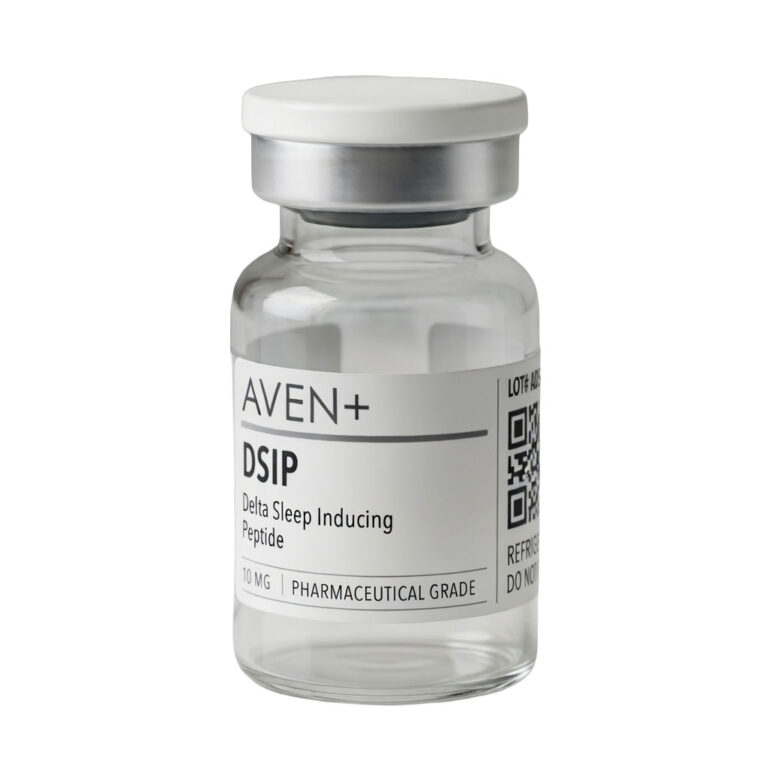
DSIP (10mg)
$49.99 – $374.99Price range: $49.99 through $374.99
Free Ship at $200+
Online Chat Support
99% Purity Guaranteed
DSIP (10mg)
DSIP (Delta Sleep-Inducing Peptide) is a research neuropeptide composed of eight amino acids and studied for its role in neuroendocrine regulation, sleep-related signaling, and stress adaptation. Research suggests DSIP may influence GABAergic activity and hypothalamic pathways, making it a valuable compound in studies of sleep biology, circadian rhythms, and peptide neurobiology.
Starting from: $49.99 – $374.99Price range: $49.99 through $374.99
Aven Peptides Guarantee
Every Aven Peptides Guarantee product is released through a controlled quality framework verifying identity, purity, consistency, endotoxin levels, and heavy metal content. Each batch undergoes analytical testing to confirm peptide composition prior to distribution, including independent laboratory verification using chromatographic and mass spectrometry methods. Only batches that pass internal quality review and release authorization enter circulation, reflecting our commitment to rigorous testing, documentation, traceability, and the continuous pursuit of uncompromising quality.
DSIP (Delta Sleep-Inducing Peptide) is a naturally occurring research neuropeptide composed of eight amino acids. It has been extensively studied for its role in sleep regulation, neuroendocrine balance, and stress adaptation. Due to its interaction with central nervous system pathways, DSIP is considered an important compound in sleep science, circadian rhythm research, and neurobiology. Below is a detailed overview of the key benefits of DSIP based on experimental and research findings.
1. Supports Sleep Regulation and Quality
DSIP is best known for its involvement in sleep-related signaling. Research suggests it may help regulate sleep onset and sleep architecture, particularly deep and restorative sleep phases. This makes DSIP a valuable peptide in studies focused on sleep disorders, insomnia mechanisms, and circadian rhythm balance.
2. Modulates Neuroendocrine Activity
DSIP has been shown to influence neuroendocrine regulation, interacting with hormonal systems that control stress, recovery, and metabolic balance. Its activity within the hypothalamic–pituitary axis makes it relevant for understanding how sleep and hormones are interconnected.
3. Supports Stress Adaptation and Resilience
Experimental data suggest DSIP may play a role in stress modulation and adaptive responses. By influencing central nervous system signaling, DSIP is studied for its potential to help organisms maintain balance under physical, emotional, or environmental stress.
4. Influences GABAergic Pathways
DSIP is associated with GABAergic neurotransmission, a key inhibitory system in the brain responsible for relaxation and neural stability. This interaction is significant in research exploring calmness, sleep induction, and nervous system regulation.
5. Supports Circadian Rhythm Research
Because of its connection to sleep–wake cycles, DSIP is widely used in studies examining circadian rhythm alignment. Understanding how DSIP influences biological clocks helps researchers explore mechanisms behind jet lag, shift work fatigue, and disrupted sleep cycles.
6. Potential Role in Cognitive Recovery Models
Quality sleep is essential for memory consolidation, learning, and cognitive recovery. DSIP’s involvement in sleep signaling makes it a useful peptide in research models studying how rest and neural recovery impact brain performance and mental clarity.
7. May Influence Pain and Stress Response Pathways
Some studies suggest DSIP may interact with pathways involved in pain perception and stress response, making it relevant in neurobiological research focused on central nervous system adaptability and resilience.
8. Valuable Tool in Peptide Neurobiology Research
Due to its simple structure and clear physiological relevance, DSIP is an important research peptide for investigating brain signaling peptides, sleep mechanisms, and neurochemical balance. Its multifunctional profile allows researchers to study how sleep, stress, and hormonal systems intersect.
Summary
In research contexts, DSIP (Delta Sleep-Inducing Peptide) is recognized for its potential benefits related to sleep regulation, neuroendocrine balance, stress adaptation, GABAergic signaling, and circadian rhythm alignment. Its role in central nervous system signaling makes it a key compound in ongoing studies of sleep biology and neuropeptide function.
Only logged in customers who have purchased this product may leave a review.
Lyophilized (freeze-dried) peptides should be stored in a refrigerator at 2–8°C (36–46°F). For long-term storage, they should be kept in a freezer at -20°C (-4°F) or below. Once reconstituted, peptides must be stored in a refrigerator at 2–8°C (36–46°F) and should not be left at room temperature for extended periods.
Add 1mL of bacteriostatic water to get a solution that is 10mg/mL, such that every 0.1mL (10 units on an insulin syringe) is equal to 1mg of DSIP.
-
Description
DSIP (Delta Sleep-Inducing Peptide) is a naturally occurring research neuropeptide composed of eight amino acids. It has been extensively studied for its role in sleep regulation, neuroendocrine balance, and stress adaptation. Due to its interaction with central nervous system pathways, DSIP is considered an important compound in sleep science, circadian rhythm research, and neurobiology. Below is a detailed overview of the key benefits of DSIP based on experimental and research findings.
1. Supports Sleep Regulation and Quality
DSIP is best known for its involvement in sleep-related signaling. Research suggests it may help regulate sleep onset and sleep architecture, particularly deep and restorative sleep phases. This makes DSIP a valuable peptide in studies focused on sleep disorders, insomnia mechanisms, and circadian rhythm balance.
2. Modulates Neuroendocrine Activity
DSIP has been shown to influence neuroendocrine regulation, interacting with hormonal systems that control stress, recovery, and metabolic balance. Its activity within the hypothalamic–pituitary axis makes it relevant for understanding how sleep and hormones are interconnected.
3. Supports Stress Adaptation and Resilience
Experimental data suggest DSIP may play a role in stress modulation and adaptive responses. By influencing central nervous system signaling, DSIP is studied for its potential to help organisms maintain balance under physical, emotional, or environmental stress.
4. Influences GABAergic Pathways
DSIP is associated with GABAergic neurotransmission, a key inhibitory system in the brain responsible for relaxation and neural stability. This interaction is significant in research exploring calmness, sleep induction, and nervous system regulation.
5. Supports Circadian Rhythm Research
Because of its connection to sleep–wake cycles, DSIP is widely used in studies examining circadian rhythm alignment. Understanding how DSIP influences biological clocks helps researchers explore mechanisms behind jet lag, shift work fatigue, and disrupted sleep cycles.
6. Potential Role in Cognitive Recovery Models
Quality sleep is essential for memory consolidation, learning, and cognitive recovery. DSIP’s involvement in sleep signaling makes it a useful peptide in research models studying how rest and neural recovery impact brain performance and mental clarity.
7. May Influence Pain and Stress Response Pathways
Some studies suggest DSIP may interact with pathways involved in pain perception and stress response, making it relevant in neurobiological research focused on central nervous system adaptability and resilience.
8. Valuable Tool in Peptide Neurobiology Research
Due to its simple structure and clear physiological relevance, DSIP is an important research peptide for investigating brain signaling peptides, sleep mechanisms, and neurochemical balance. Its multifunctional profile allows researchers to study how sleep, stress, and hormonal systems intersect.
Summary
In research contexts, DSIP (Delta Sleep-Inducing Peptide) is recognized for its potential benefits related to sleep regulation, neuroendocrine balance, stress adaptation, GABAergic signaling, and circadian rhythm alignment. Its role in central nervous system signaling makes it a key compound in ongoing studies of sleep biology and neuropeptide function.
-
Reviews (0)
Reviews
There are no reviews yet.
Only logged in customers who have purchased this product may leave a review.
-
Storage Instructions
Lyophilized (freeze-dried) peptides should be stored in a refrigerator at 2–8°C (36–46°F). For long-term storage, they should be kept in a freezer at -20°C (-4°F) or below. Once reconstituted, peptides must be stored in a refrigerator at 2–8°C (36–46°F) and should not be left at room temperature for extended periods.
-
Reconstitution
Add 1mL of bacteriostatic water to get a solution that is 10mg/mL, such that every 0.1mL (10 units on an insulin syringe) is equal to 1mg of DSIP.


Reviews
There are no reviews yet.