
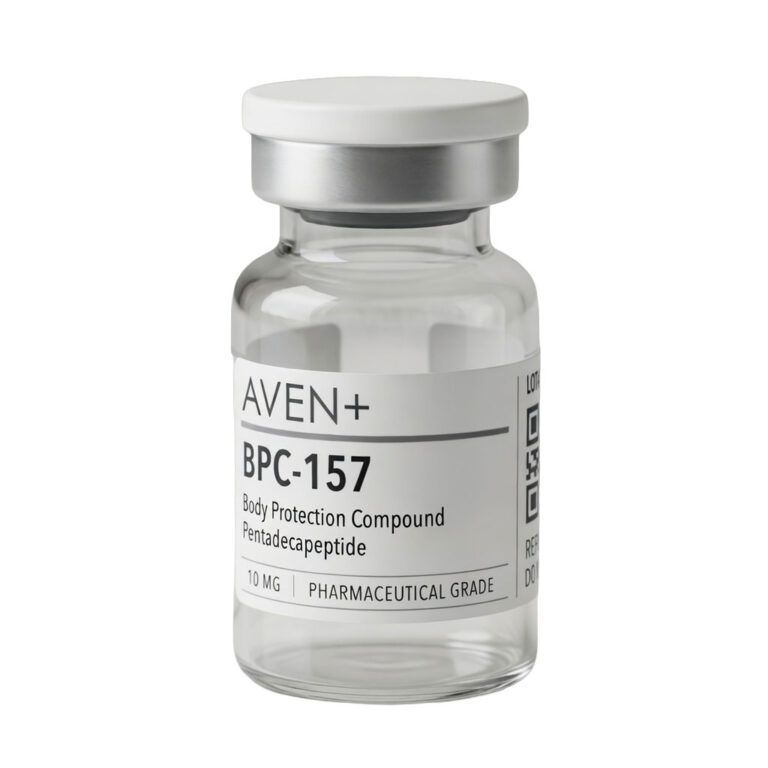
BPC-157 (10mg)
$69.99 – $524.93Price range: $69.99 through $524.93
Free Ship at $200+
Online Chat Support
99% Purity Guaranteed
BPC-157 (10mg)
BPC-157 is a research peptide made up of 15 amino acids and derived from the body protection compound naturally found in gastric juice. Scientific studies indicate that BPC-157 may support angiogenesis, cytoprotection, and regenerative signaling by modulating nitric oxide pathways, growth factor activity, and extracellular matrix remodeling. These properties make BPC-157 a valuable peptide for research into tissue repair, cellular recovery, and regenerative processes under stress conditions.
Starting from: $69.99 – $524.93Price range: $69.99 through $524.93
Aven Peptides Guarantee
Every Aven Peptides Guarantee product is released through a controlled quality framework verifying identity, purity, consistency, endotoxin levels, and heavy metal content. Each batch undergoes analytical testing to confirm peptide composition prior to distribution, including independent laboratory verification using chromatographic and mass spectrometry methods. Only batches that pass internal quality review and release authorization enter circulation, reflecting our commitment to rigorous testing, documentation, traceability, and the continuous pursuit of uncompromising quality.
BPC-157 (Body Protection Compound-157) is a synthetic research peptide derived from a naturally occurring protein found in gastric juice. It has gained significant attention in scientific and biomedical research due to its broad potential benefits related to cellular protection, tissue repair, and regenerative processes. Below is a long-form, SEO-friendly overview of the key benefits of BPC-157 based on experimental and preclinical research.
1. Supports Tissue Repair and Regeneration
One of the most studied benefits of BPC-157 is its potential role in accelerating tissue healing. Research suggests it may support the repair of muscles, tendons, ligaments, and connective tissue by influencing cellular signaling involved in regeneration. This makes BPC-157 a valuable research model for understanding recovery mechanisms after physical stress or injury.
2. Promotes Angiogenesis (Blood Vessel Formation)
BPC-157 has been shown in studies to influence angiogenic signaling, the process by which new blood vessels form. Healthy angiogenesis is essential for delivering oxygen and nutrients to damaged tissues, supporting faster and more efficient healing at the cellular level.
3. Cytoprotective Effects at the Cellular Level
Another key benefit of BPC-157 is its cytoprotective activity, meaning it may help protect cells from damage caused by stress, inflammation, or toxic exposure. This protective role is linked to its ability to maintain cellular integrity and support normal biological function under adverse conditions.
4. Supports Gastrointestinal Integrity
Because BPC-157 originates from a compound found in gastric juice, it has been widely researched for its effects on gut and digestive tissue health. Experimental data suggest it may help maintain the integrity of the gastrointestinal lining and support repair of the mucosal barrier under stress conditions.
5. Modulates Nitric Oxide Pathways
Research indicates that BPC-157 interacts with nitric oxide (NO) signaling, a critical pathway involved in blood flow regulation, inflammation balance, and cellular communication. By modulating this pathway, BPC-157 may contribute to improved vascular response and tissue resilience.
6. Influences Growth Factor Expression
BPC-157 has been associated with the regulation of growth factors involved in healing and regeneration. Growth factors play a crucial role in cell migration, proliferation, and extracellular matrix formation, all of which are essential for tissue repair.
7. Supports Extracellular Matrix Remodeling
The extracellular matrix (ECM) provides structural and biochemical support to surrounding cells. Studies suggest BPC-157 may influence ECM remodeling, helping tissues adapt and recover more effectively after stress or injury.
8. Valuable Tool for Regenerative Research
Due to its wide range of biological interactions, BPC-157 is commonly used as a research peptide to study molecular repair mechanisms, stress response, and regenerative biology. Its multi-pathway activity makes it especially useful in experimental models focused on healing and recovery.
Summary
In research settings, BPC-157 is recognized for its potential benefits related to tissue healing, angiogenesis, cellular protection, gut integrity, and regenerative signaling. While ongoing studies continue to explore its full range of mechanisms, BPC-157 remains an important compound for understanding how the body responds to injury and stress at the molecular level.
Only logged in customers who have purchased this product may leave a review.
Lyophilized (freeze-dried) peptides should be stored in a refrigerator at 2–8°C (36–46°F). For long-term storage, they should be kept in a freezer at -20°C (-4°F) or below. Once reconstituted, peptides must be stored in a refrigerator at 2–8°C (36–46°F) and should not be left at room temperature for extended periods.
Add 2mL of bacteriostatic water to get a solution that is 5mg/mL, such that every 0.1mL (10 units on an insulin syringe) is equal to 500mcg of BPC-157.
-
Description
BPC-157 (Body Protection Compound-157) is a synthetic research peptide derived from a naturally occurring protein found in gastric juice. It has gained significant attention in scientific and biomedical research due to its broad potential benefits related to cellular protection, tissue repair, and regenerative processes. Below is a long-form, SEO-friendly overview of the key benefits of BPC-157 based on experimental and preclinical research.
1. Supports Tissue Repair and Regeneration
One of the most studied benefits of BPC-157 is its potential role in accelerating tissue healing. Research suggests it may support the repair of muscles, tendons, ligaments, and connective tissue by influencing cellular signaling involved in regeneration. This makes BPC-157 a valuable research model for understanding recovery mechanisms after physical stress or injury.
2. Promotes Angiogenesis (Blood Vessel Formation)
BPC-157 has been shown in studies to influence angiogenic signaling, the process by which new blood vessels form. Healthy angiogenesis is essential for delivering oxygen and nutrients to damaged tissues, supporting faster and more efficient healing at the cellular level.
3. Cytoprotective Effects at the Cellular Level
Another key benefit of BPC-157 is its cytoprotective activity, meaning it may help protect cells from damage caused by stress, inflammation, or toxic exposure. This protective role is linked to its ability to maintain cellular integrity and support normal biological function under adverse conditions.
4. Supports Gastrointestinal Integrity
Because BPC-157 originates from a compound found in gastric juice, it has been widely researched for its effects on gut and digestive tissue health. Experimental data suggest it may help maintain the integrity of the gastrointestinal lining and support repair of the mucosal barrier under stress conditions.
5. Modulates Nitric Oxide Pathways
Research indicates that BPC-157 interacts with nitric oxide (NO) signaling, a critical pathway involved in blood flow regulation, inflammation balance, and cellular communication. By modulating this pathway, BPC-157 may contribute to improved vascular response and tissue resilience.
6. Influences Growth Factor Expression
BPC-157 has been associated with the regulation of growth factors involved in healing and regeneration. Growth factors play a crucial role in cell migration, proliferation, and extracellular matrix formation, all of which are essential for tissue repair.
7. Supports Extracellular Matrix Remodeling
The extracellular matrix (ECM) provides structural and biochemical support to surrounding cells. Studies suggest BPC-157 may influence ECM remodeling, helping tissues adapt and recover more effectively after stress or injury.
8. Valuable Tool for Regenerative Research
Due to its wide range of biological interactions, BPC-157 is commonly used as a research peptide to study molecular repair mechanisms, stress response, and regenerative biology. Its multi-pathway activity makes it especially useful in experimental models focused on healing and recovery.
Summary
In research settings, BPC-157 is recognized for its potential benefits related to tissue healing, angiogenesis, cellular protection, gut integrity, and regenerative signaling. While ongoing studies continue to explore its full range of mechanisms, BPC-157 remains an important compound for understanding how the body responds to injury and stress at the molecular level.
-
Reviews (0)
Reviews
There are no reviews yet.
Only logged in customers who have purchased this product may leave a review.
-
Storage Instructions
Lyophilized (freeze-dried) peptides should be stored in a refrigerator at 2–8°C (36–46°F). For long-term storage, they should be kept in a freezer at -20°C (-4°F) or below. Once reconstituted, peptides must be stored in a refrigerator at 2–8°C (36–46°F) and should not be left at room temperature for extended periods.
-
Reconstitution
Add 2mL of bacteriostatic water to get a solution that is 5mg/mL, such that every 0.1mL (10 units on an insulin syringe) is equal to 500mcg of BPC-157.

Reviews
There are no reviews yet.